


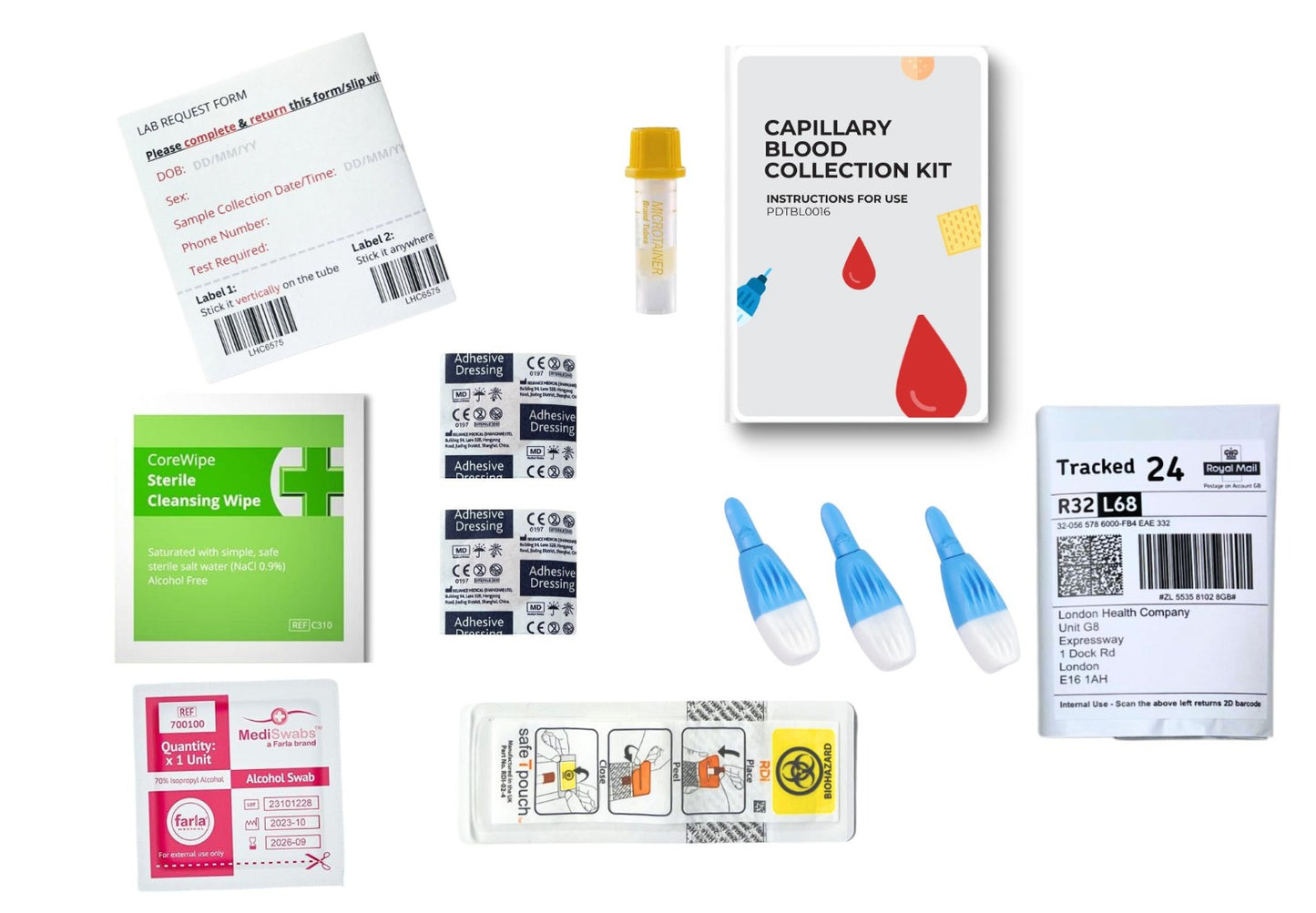
Order your kit
Your test arrives in discreet packaging with clear instructions.

Measures ApoB alongside total cholesterol, LDL cholesterol, HDL cholesterol, triglycerides and non-HDL cholesterol. Together these markers provide information about circulating atherogenic particles and the lipid pattern used as part of cardiovascular-risk assessment.
Clinicians use the lipid profile as part of overall cardiovascular-risk assessment. ApoB adds an estimate of the number of atherogenic lipoprotein particles and can be particularly informative when ApoB and LDL cholesterol do not tell the same story. Treatment decisions still depend on overall risk, medical history and current guidance.
An adult who wants a lipid profile with ApoB for additional cardiovascular-risk context, including someone monitoring an established clinician-led plan. New chest symptoms or other urgent concerns require medical assessment rather than postal testing.
The supplier recommends fasting for 10–12 hours with water only, particularly if you have previously had high triglycerides or a clinician requested a fasting lipid profile. If you do not fast, avoid a fatty meal for at least 6 hours before collection. Continue prescribed medicines unless a clinician tells you otherwise.
Read these markers as a pattern. LDL and non-HDL cholesterol describe cholesterol carried in atherogenic particles, while ApoB estimates their number. Triglycerides are sensitive to recent food and alcohol intake, and HDL contributes context but does not cancel risk from raised ApoB, LDL or non-HDL cholesterol.
Review the complete lipid and ApoB pattern with a clinician, especially if you have diabetes, kidney disease, known cardiovascular disease, a strong family history or take lipid-lowering medicine. Do not start, stop or change statins or other treatment from this result alone.
This blood test does not calculate your complete cardiovascular risk, diagnose blocked arteries or rule out heart disease. Blood pressure, age, smoking, diabetes, kidney health, family history and existing cardiovascular disease can materially change interpretation and treatment thresholds.
Do not wait for a home-test result if you feel seriously unwell. Call 999 for a life-threatening emergency, or use NHS 111 when you need urgent advice and are unsure what to do.