

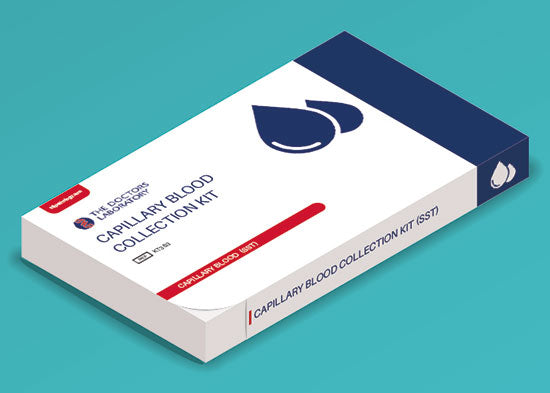

Order your kit
Your test arrives in discreet packaging with clear instructions.

Measures Total IgE and allergen-specific IgE across the ALEX3 panel of 300 allergens. The results can show patterns of sensitisation to foods and environmental sources, but sensitisation is not the same as a clinical allergy and must be interpreted alongside symptoms and exposure history.
Clinicians use Total IgE, ALEX3 allergen panel and Molecular allergens to look for IgE sensitisation and then compare the result with the person’s exposure and reaction history. Sensitisation is not the same as clinical allergy, and the test cannot predict reaction severity.
Someone exploring a suspected allergy with a clinician who can interpret the laboratory result alongside a detailed reaction history.
Return the sample on the same day it is collected. Do not post over weekends or bank holidays.
The report shows which of the listed allergen markers produced measurable IgE and may grade the response. A higher laboratory class does not reliably predict how severe a real-life reaction will be, while a negative result cannot rule out every allergy mechanism.
Compare any sensitisation result with what happens during real exposure. Do not start broad avoidance from the laboratory value alone; discuss significant reactions with an allergy clinician and a dietitian when food exclusion is being considered.
A laboratory antibody result must be interpreted with exposure and reaction history. Sensitisation is not the same as clinical allergy and a result cannot predict reaction severity.
Sudden breathing difficulty or swelling of the mouth, tongue or throat may be anaphylaxis: call 999 immediately.