


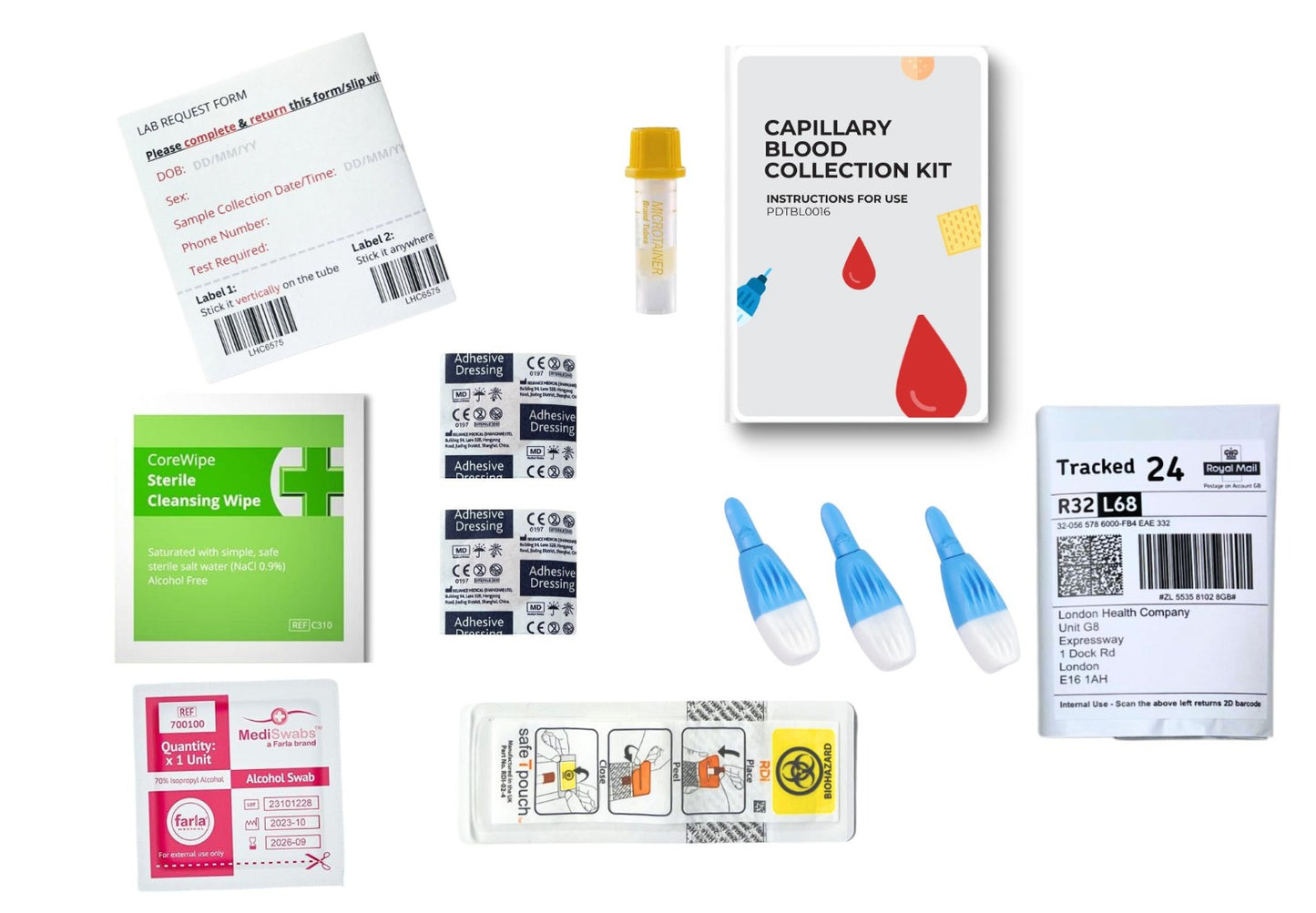
Order your kit
Your test arrives in discreet packaging with clear instructions.

A Total Vitamin B12 Blood Test measures the total concentration of vitamin B12 present in your blood.
Vitamin B12, also known as cobalamin, is a water-soluble vitamin that your body needs for several important functions. It contributes to normal red blood cell formation, supports the nervous system and is involved in DNA synthesis and normal cellular metabolism.
Your body cannot produce vitamin B12 naturally, so it needs to obtain it from dietary sources or supplements.
Vitamin B12 is naturally found mainly in foods such as meat, fish, eggs and dairy products, while some foods are fortified with B12.
A Total Vitamin B12 Blood Test measures the amount of vitamin B12 in your blood. Testing can help identify whether your B12 level is within the expected range and may provide useful information when investigating symptoms that could be associated with vitamin B12 deficiency.s.
This test measures total vitamin B12 in your blood.
A blood B12 measurement can help determine whether your level falls within the laboratory's stated reference range.
A low B12 level may be associated with vitamin B12 deficiency, although the result needs to be interpreted alongside symptoms, medical history and, where appropriate, other laboratory tests.
Vitamin B12 deficiency can affect the blood and nervous system. Symptoms can include tiredness, weakness, numbness or tingling, a sore or swollen tongue, memory or concentration difficulties and problems with balance.
However, these symptoms can have many different causes, so they should not automatically be attributed to vitamin B12.
Healthcare professionals may use vitamin B12 testing when investigating symptoms or circumstances that could be associated with B12 deficiency.
Testing may be considered alongside other blood tests, such as a full blood count and folate measurement, depending on the individual's symptoms and clinical circumstances.
Clinicians may also consider factors that can affect vitamin B12 levels, including:
A B12 result is therefore only one part of a wider clinical assessment.
A Total Vitamin B12 Blood Test may be useful if you are concerned about your B12 status or have symptoms that you would like to discuss with a healthcare professional.
You may wish to consider testing if you experience symptoms such as:
People who eat little or no animal-derived food may also need to pay particular attention to their vitamin B12 intake.
Return the sample on the same day it is collected. Do not post over weekends or bank holidays.
The laboratory will report Total vitamin B12 with an assay-specific reference range, threshold or qualitative interpretation. Read the biomarker explanation above for common reasons a result may be high, low, detected or reactive, then use the laboratory comment and clinical context to decide whether repeat or follow-up testing is needed.
Your result should be considered alongside your symptoms, medical history and lifestyle.
If your result is lower than expected, speak with your GP or another qualified healthcare professional about what it means for you.
Depending on your circumstances, they may recommend:
Do not start high-dose supplementation or change prescribed treatment solely on the basis of a home-test result without appropriate medical advice.
The result is a snapshot from one sample. It cannot diagnose a condition on its own; values inside or outside a reference range require clinical context.
Do not wait for a home-test result if you feel seriously unwell. Call 999 for a life-threatening emergency, or use NHS 111 when you need urgent advice and are unsure what to do.
Your secure report shows the measured values, reference ranges and a doctor’s comment where appropriate.