Measures the 17 biomarkers listed below across cholesterol, liver-related enzymes and proteins, kidney-related waste markers, calcium, amylase and inflammation. It provides a broad snapshot, but it does not assess every aspect of heart, liver, kidney or pancreatic health and should not be described as a diagnosis or a complete “MOT”.
At a glance
-
Sample: Blood
-
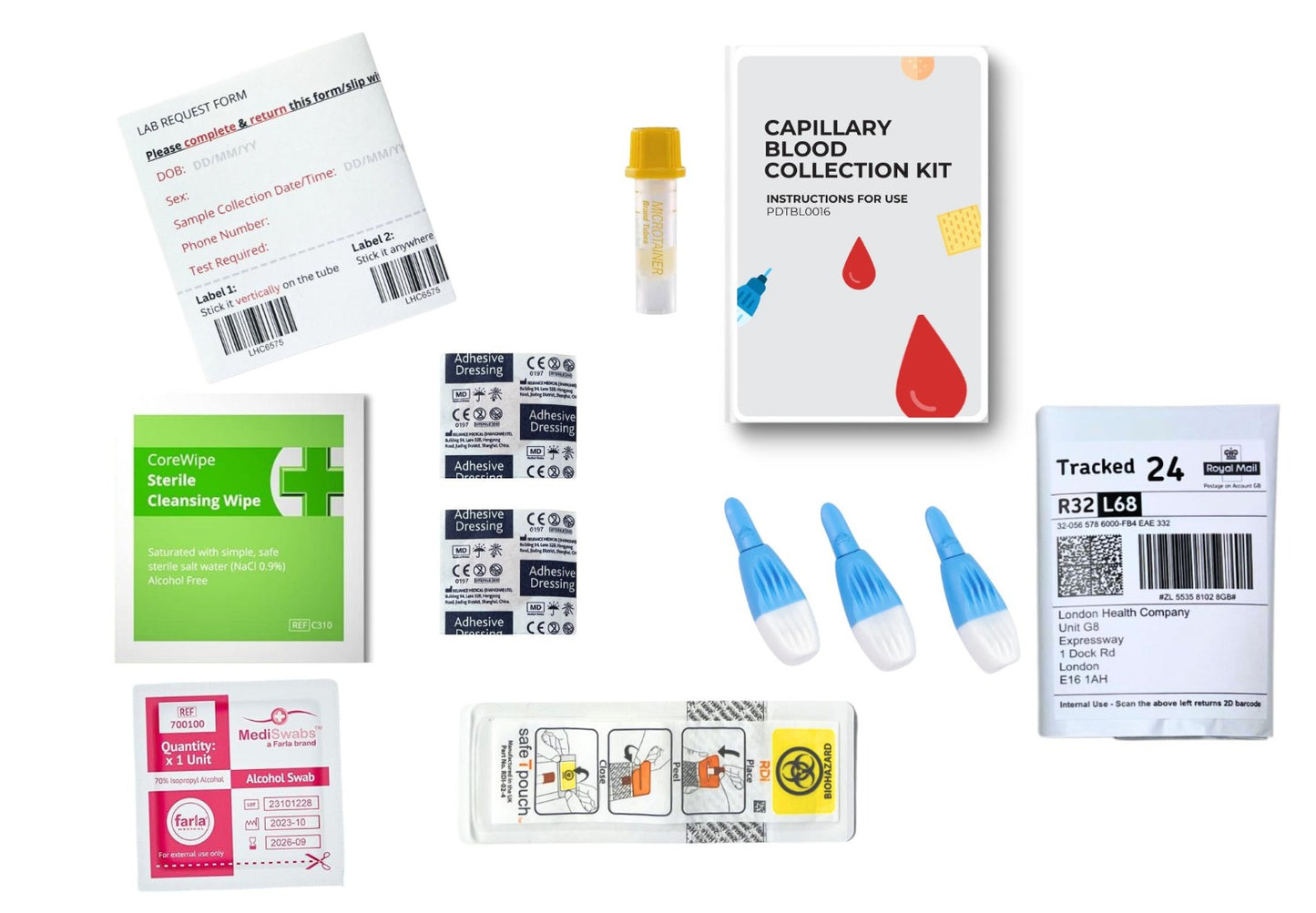
Collection: Follow the supplied instructions for providing your blood sample
-
Estimated turnaround: 1-3 days from laboratory receipt of a usable sample
What this test measures
- Total cholesterol
- The overall amount of cholesterol in blood. Higher values can contribute to cardiovascular risk, but treatment decisions use the full lipid pattern and overall risk rather than total cholesterol alone.
- LDL cholesterol
- Cholesterol carried in low-density lipoproteins. Higher LDL is associated with greater cardiovascular risk; targets depend on overall risk and whether cardiovascular disease is already present.
- HDL cholesterol
- Cholesterol carried in high-density lipoproteins. HDL contributes to risk calculations, but a higher value does not cancel the effect of raised LDL or other cardiovascular risk factors.
- Triglycerides
- A type of fat circulating in blood. A raised result may relate to recent food intake, alcohol, diabetes, medicines or inherited factors; very high levels can increase pancreatitis risk.
- AST
- An enzyme found in liver and other tissues that can rise with cell injury. A raised result can occur with liver or muscle injury and needs the wider liver profile, symptoms, medicines and alcohol history for context.
- ALT
- An enzyme used as a marker of liver-cell injury. A raised result can occur with liver-cell injury, but the level alone does not identify the cause or measure total liver function.
- GGT
- An enzyme that can change with liver or bile-duct conditions and alcohol exposure. A raised result can occur with alcohol exposure, medicines or liver and bile-duct conditions, but it is not specific to one cause.
- Globulin
- A group of blood proteins involved in immune and other functions. A high or low result can reflect changes in immune proteins, hydration, liver function or protein loss and may need more specific testing.
- Total protein
- The combined amount of major proteins in blood. A high or low result reflects the balance of albumin and globulins and can change with hydration, inflammation, liver disease or protein loss.
- Albumin
- A protein made mainly by the liver. A low result can occur with inflammation, liver or kidney disease, poor nutrition or fluid changes and is not specific to one condition.
- Urea
- A waste product influenced by kidney function and hydration. A raised or reduced result is non-specific and can change with hydration, kidney function, protein intake, liver function and gastrointestinal bleeding.
- Uric acid
- A waste product from purine breakdown. An in-range or out-of-range result is not a diagnosis by itself; clinicians interpret it using the laboratory range, symptoms, medical history and related tests.
- Creatinine
- A muscle waste product used to assess kidney filtration. A raised result may reflect reduced kidney filtration but is also influenced by muscle mass, hydration, medicines and recent meat intake.
- Calcium
- A mineral measured in blood; it does not measure bone density. A high or low result can relate to parathyroid, vitamin D, kidney, medicine or protein changes; adjusted or ionised calcium may be needed for interpretation.
- Amylase
- A digestive enzyme produced mainly by the pancreas and salivary glands. An in-range or out-of-range result is not a diagnosis by itself; clinicians interpret it using the laboratory range, symptoms, medical history and related tests.
- C-reactive protein (CRP)
- A non-specific marker that can rise with inflammation. A raised result shows inflammation somewhere in the body but does not identify its location or cause; infection, injury and inflammatory conditions are among many possibilities.
- Total bilirubin
- A pigment produced during red-blood-cell breakdown and processed by the liver. A raised result may occur with increased red-cell breakdown, impaired liver processing or bile-flow problems; some inherited causes are harmless.
How clinicians use this test
Clinicians interpret this collection as several smaller profiles: lipids for cardiovascular risk, enzymes and proteins for liver-related patterns, urea and creatinine for kidney context, and CRP for non-specific inflammation. The panel can identify areas for follow-up but cannot provide a single overall health diagnosis.
Is this the right test for you?
This may suit someone who specifically wants to check the 17 listed markers, or repeat the marker(s) as part of an established monitoring plan. Check that the listed panel matches the question you want answered before ordering. The test should not delay assessment of persistent or worsening symptoms.
Preparation and collection
Follow the supplied kit instructions. No product-specific preparation requirements are stated publicly. Do not stop prescribed medicines unless a clinician tells you to.
Understanding your result
Read the result as several related patterns rather than one score. Lipid values contribute to cardiovascular risk; liver-related markers, proteins and kidney-related waste markers need to be interpreted together; CRP only indicates non-specific inflammation. One mild abnormality may be temporary or unrelated to disease.
Your results and next steps
Review the 17 listed markers against the reference range and laboratory comment, then consider whether the pattern fits your symptoms, medicines and reason for testing. Share a concerning or unexpected result with a clinician before changing treatment, supplements or diet.
Limitations
The result is a snapshot from one sample. It cannot diagnose a condition on its own; values inside or outside a reference range require clinical context.
When to get medical help
Do not wait for a home-test result if you feel seriously unwell. Call 999 for a life-threatening emergency, or use NHS 111 when you need urgent advice and are unsure what to do.