


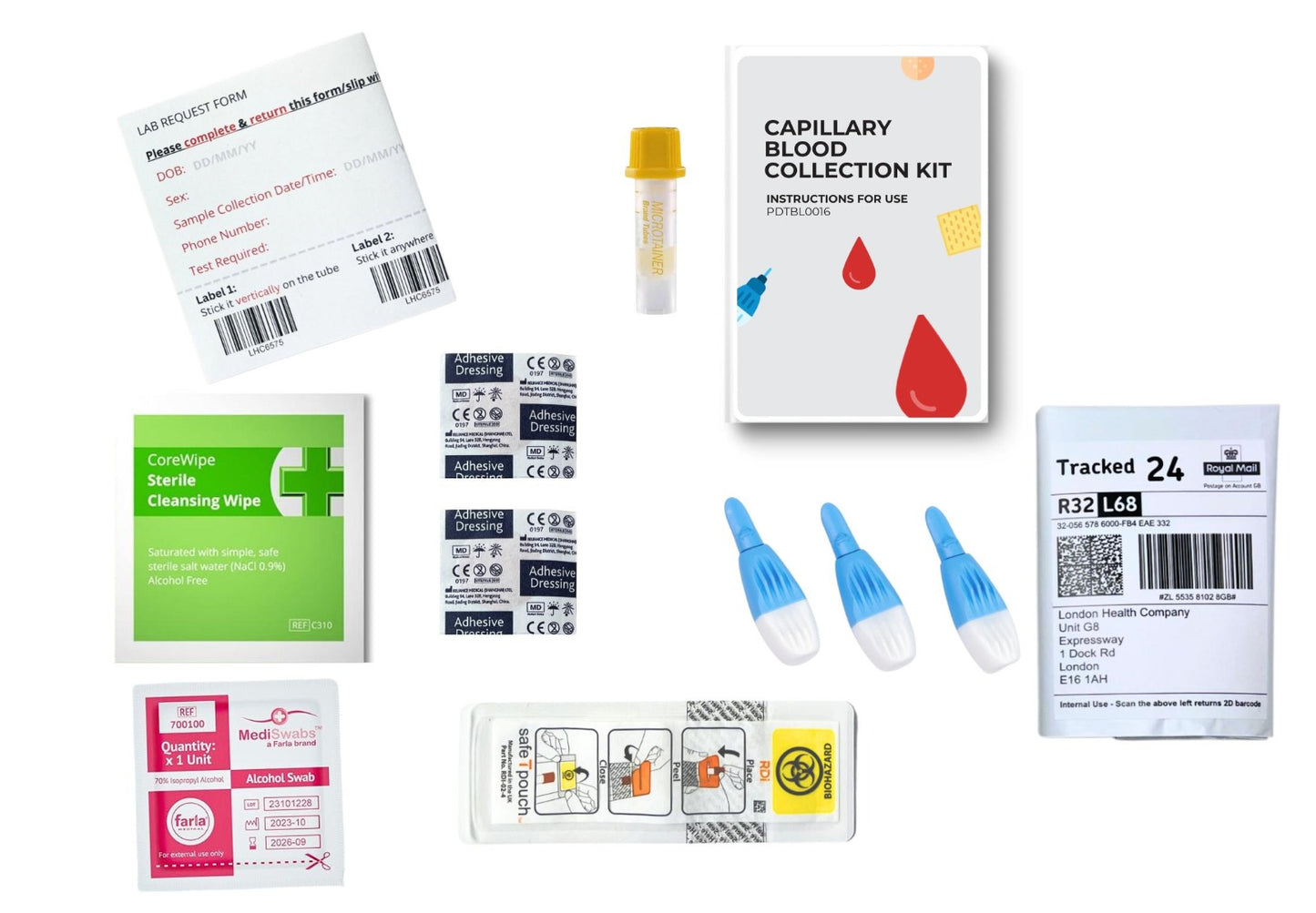
Order your kit
Your test arrives in discreet packaging with clear instructions.

Measures folate (vitamin B9) in blood. It may help investigate a possible deficiency or interpret selected blood-count changes, but symptoms such as tiredness are non-specific and results should be considered alongside vitamin B12 and clinical history.
Clinicians use Folate to investigate relevant symptoms, monitor a known condition or add context to a broader health assessment. The result can support a diagnosis or next-step decision, but it is not a diagnosis on its own.
This may suit someone who specifically wants to check Folate, or repeat the marker(s) as part of an established monitoring plan. It is a focused test and may not include related markers needed to explain an abnormal result. The test should not delay assessment of persistent or worsening symptoms.
Follow the supplied kit instructions. No product-specific preparation requirements are stated publicly. Do not stop prescribed medicines unless a clinician tells you to.
The laboratory will report Folate with an assay-specific reference range, threshold or qualitative interpretation. Read the biomarker explanation above for common reasons a result may be high, low, detected or reactive, then use the laboratory comment and clinical context to decide whether repeat or follow-up testing is needed.
Review Folate against the reference range and laboratory comment, then consider whether the pattern fits your symptoms, medicines and reason for testing. Share a concerning or unexpected result with a clinician before changing treatment, supplements or diet.
The result is a snapshot from one sample. It cannot diagnose a condition on its own; values inside or outside a reference range require clinical context.
Do not wait for a home-test result if you feel seriously unwell. Call 999 for a life-threatening emergency, or use NHS 111 when you need urgent advice and are unsure what to do.