


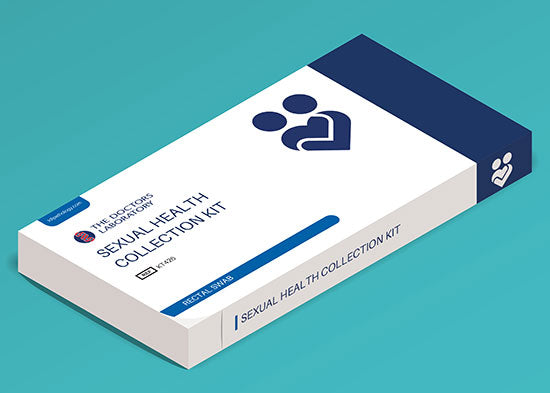
Order your kit
Your test arrives in discreet packaging with clear instructions.

Tests a rectal swab for lymphogranuloma venereum (LGV), caused by specific Chlamydia trachomatis types. People with rectal pain, discharge, bleeding or a known contact should attend a sexual-health clinic for examination and complete testing.
Clinicians use Lymphogranuloma venereum-associated Chlamydia trachomatis to look for the listed infection, exposure or resistance markers at the sampled sites. Results may support diagnosis, but window periods, site selection and confirmatory testing remain important.
Adults seeking testing for the listed infection(s) and sampled site(s), particularly after an appropriate test window. People with symptoms or a known contact should use a sexual-health service.
Return the sample on the same day it is collected. Do not post over weekends or bank holidays.
Results are usually reported as detected, not detected, reactive or non-reactive rather than simply “normal”. A reactive or detected result may need confirmation or treatment; a non-detected result does not exclude exposure during the window period or infection at a site that was not sampled.
Review positive, reactive, unexpected or persistent-symptom results with a sexual-health service. Partners and treatment should be managed using clinician advice.
This test covers only the listed infections and sampled sites. Testing during a window period can miss infection, and reactive screening results may require confirmation.
Do not wait for a postal result if you have symptoms, a known contact, are pregnant with a concern, or may need time-critical HIV post-exposure prophylaxis. Contact an NHS sexual-health service. Call 999 for a life-threatening emergency.