About this test
Measures FSH, LH and oestradiol alongside TSH and free T4. It may support assessment where menopausal status is uncertain and can identify thyroid results worth reviewing, but blood testing alone does not diagnose perimenopause or menopause.
At a glance
- Sample: Blood
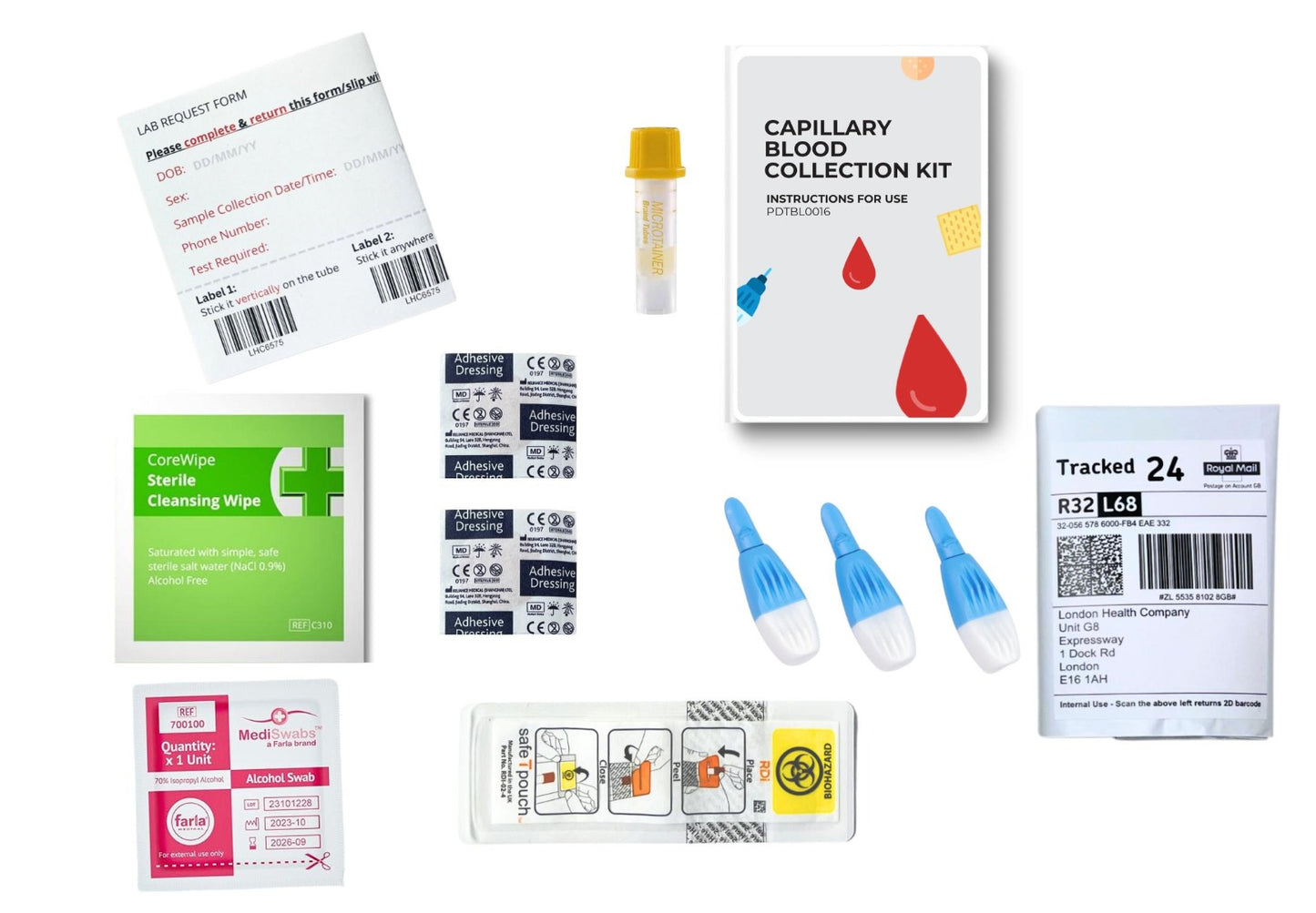
- Collection: Follow the supplied instructions for providing your blood sample
- Estimated turnaround: Contact Home2Lab for the current laboratory estimate before ordering
What this test measures
- Follicle-stimulating hormone (FSH)
- A reproductive hormone that often changes across the menopausal transition. The meaning changes with sex, age and menstrual-cycle timing; it may contribute to assessment of ovarian, pituitary or testicular function.
- Luteinising hormone (LH)
- A reproductive hormone involved in ovarian signalling. The result varies with sex and cycle timing and is interpreted with symptoms and other reproductive hormones.
- Oestradiol
- A main form of oestrogen whose level varies with cycle and menopausal stage. An in-range or out-of-range result is not a diagnosis by itself; clinicians interpret it using the laboratory range, symptoms, medical history and related tests.
- Thyroid-stimulating hormone (TSH)
- A pituitary signal used to assess thyroid function. A high or low result can suggest an underactive or overactive thyroid pattern, but free thyroid hormones, symptoms, medicines and pregnancy status may be needed for diagnosis.
- Free T4
- The unbound fraction of a main thyroid hormone. A low or high result is interpreted with TSH to assess thyroid function; illness, pregnancy and medicines can alter the pattern.
How clinicians use this test
Clinicians use the 5 listed markers as part of hormone assessment, often with related hormones and carefully chosen collection timing. One value rarely establishes the cause of symptoms by itself.
Is this the right test for you?
An adult exploring the stated hormone marker with a clinician or monitoring an established plan, with collection timing and medicines taken into account.
Preparation and collection
Follow the supplied kit instructions. No product-specific preparation requirements are stated publicly. Do not stop prescribed medicines unless a clinician tells you to.
Understanding your result
The most useful information is usually the pattern across the 5 listed markers, not one isolated flag. Related markers can support or contradict each other, and a mildly out-of-range value may reflect normal biological variation, collection conditions or temporary illness rather than disease.
Your results and next steps
Review the result with collection timing, medicines and related hormones in mind. Do not start, stop or change prescribed hormone or thyroid treatment from a single home-test result without clinician advice.
Limitations
Hormone values can vary with collection time, age, medicines and biological state. A single result does not establish the cause of symptoms.
When to get medical help
Do not wait for a home-test result if you feel seriously unwell. Call 999 for a life-threatening emergency, or use NHS 111 when you need urgent advice and are unsure what to do.
Who this test is for
- People who want a clearer view of the concern described above
- Anyone comfortable using the stated sample-collection method
- People who want doctor-reviewed results and practical next-step guidance
How it works
How to prepare
- Read the instructions before collecting your sample
- Check whether timing, fasting or medication guidance applies
- Collect and post on the same day wherever possible
Understanding your results
Clear ranges and doctor guidance
Your secure report shows the measured values, reference ranges and a doctor’s comment where appropriate.