


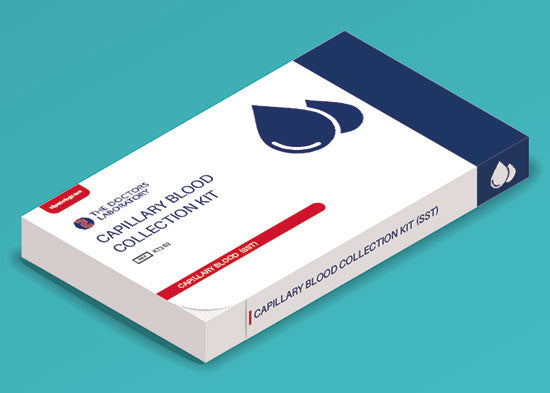
Order your kit
Your test arrives in discreet packaging with clear instructions.

Measures total prostate-specific antigen (PSA) in blood. PSA can be raised for reasons other than cancer and some prostate cancers do not raise PSA; discuss whether testing is appropriate and what the result means with a clinician.
Clinicians may use Total prostate-specific antigen (PSA) as one part of investigating symptoms, estimating risk or planning follow-up. Tumour and risk markers cannot diagnose or exclude cancer on their own.
Someone considering this marker after discussing its benefits, limitations and follow-up with a clinician. It is not a substitute for symptom assessment or an NHS screening pathway.
Return the sample on the same day it is collected. Do not post over weekends or bank holidays.
The laboratory will report Total prostate-specific antigen (PSA) with an assay-specific reference range, threshold or qualitative interpretation. Read the biomarker explanation above for common reasons a result may be high, low, detected or reactive, then use the laboratory comment and clinical context to decide whether repeat or follow-up testing is needed.
Share any raised, positive or unexpected result with your GP or the clinician who advised testing. Further assessment may include examination, imaging or another test.
This test cannot diagnose or rule out cancer by itself. False-positive and false-negative results are possible, and symptoms require assessment regardless of the result.
Do not wait for a home-test result if you feel seriously unwell. Call 999 for a life-threatening emergency, or use NHS 111 when you need urgent advice and are unsure what to do.