


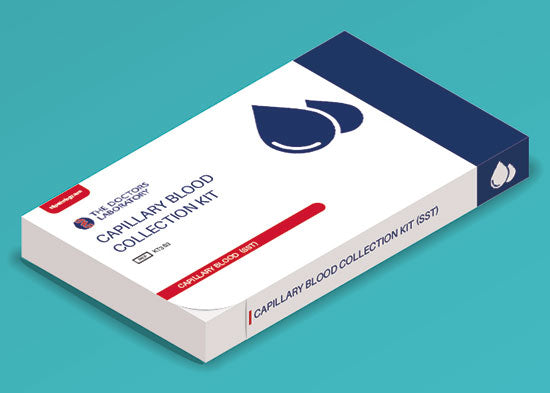
Order your kit
Your test arrives in discreet packaging with clear instructions.

Produces a risk estimate for clinically significant prostate cancer by combining laboratory and clinical information. It is a risk-assessment tool, not a cancer diagnosis, and the result is intended to help a clinician decide whether investigations such as MRI or biopsy should be considered.
Clinicians use the Stockholm3 risk score to help estimate the likelihood of clinically significant prostate cancer and decide whether further assessment may be appropriate. It does not replace a prostate assessment, MRI, biopsy or specialist judgement.
This may suit someone entering a clinician-led prostate-cancer risk assessment who can attend an arranged venous blood collection. It is not suitable as an unsupervised postal finger-prick test.
Arrange the collection and transport pathway before ordering. Both tubes must reach TDL within 48 hours of collection and must not be posted.
The report gives a risk estimate rather than a simple positive or negative diagnosis. A higher score does not prove cancer and a lower score cannot exclude it; the clinician uses the score with age, symptoms, examination and other information to plan next steps.
The ordering clinician should explain the risk score and whether prostate MRI, specialist referral, repeat testing or another investigation is appropriate.
The published TDL page does not list the model’s individual protein, genetic and clinical inputs. The score cannot diagnose or rule out prostate cancer and is useful only within a clinician-led follow-up pathway.
Do not wait for a home-test result if you feel seriously unwell. Call 999 for a life-threatening emergency, or use NHS 111 when you need urgent advice and are unsure what to do.