Measures ferritin, circulating iron and eight full-blood-count markers that can provide context for iron status, anaemia patterns and other blood changes. Fatigue has many possible causes, so this panel cannot identify the reason for tiredness on its own.
At a glance
-
Sample: Finger-prick blood
-
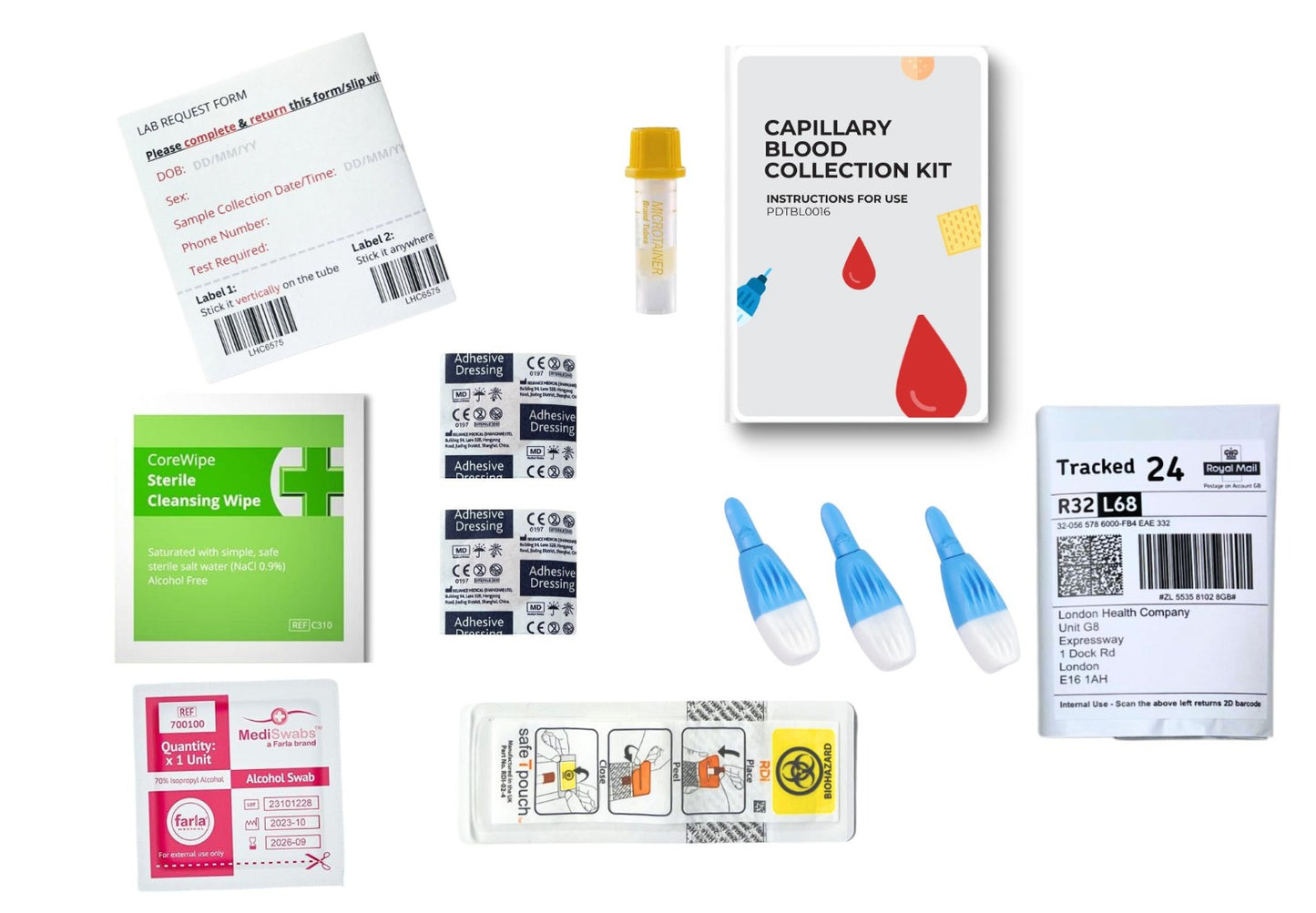
Collection: Collect a finger-prick blood sample at home using the supplied kit
-
Estimated turnaround: 1-3 days from laboratory receipt of a usable sample
What this test measures
- Ferritin
- A protein used as a marker of stored iron. A low result strongly supports depleted iron stores. A normal or raised result does not always exclude iron deficiency because inflammation, liver conditions and other factors can raise ferritin.
- White blood cell count (WBC)
- The number of immune-system cells in the sample; an unusual result has many possible causes. A raised or reduced count can occur with infection, inflammation, medicines, immune conditions or bone-marrow disorders, so the count needs the other blood results and symptoms for context.
- Red blood cell count (RBC)
- The number of cells that carry oxygen around the body. A low count may occur with anaemia or blood loss; a high count can reflect dehydration, reduced oxygen levels or increased red-cell production.
- Haemoglobin (Hb)
- The oxygen-carrying protein inside red blood cells. A low result can support anaemia, while a high result can occur with dehydration or conditions that increase red-cell production.
- Haematocrit (HCT)
- The proportion of blood volume made up of red blood cells. A low proportion can accompany anaemia; a high proportion can occur with dehydration or increased red-cell production.
- Mean corpuscular volume (MCV)
- The average size of red blood cells. A low MCV can occur with iron deficiency or some inherited haemoglobin conditions; a high MCV can occur with vitamin B12 or folate deficiency, alcohol use, liver disease or medicines.
- Mean corpuscular haemoglobin (MCH)
- The average amount of haemoglobin in each red blood cell. A low result often accompanies small or iron-deficient red cells; interpretation is strongest alongside MCV, haemoglobin and ferritin.
- Mean corpuscular haemoglobin concentration (MCHC)
- The average concentration of haemoglobin within red blood cells. A low result can accompany iron-deficient red cells, while unusual high results require review for analytical or red-cell causes.
- Iron
- The amount of iron circulating in the blood sample; it can vary with collection timing and recent intake. A low or high result is not diagnostic by itself because circulating iron changes with collection time, recent intake, supplements and illness.
- Platelets (PLT)
- Small blood-cell fragments involved in normal clotting. A low count can increase bleeding risk, while a high count may be reactive to inflammation, infection or iron deficiency and sometimes needs further investigation.
How clinicians use this test
Clinicians use the 10 listed markers to investigate relevant symptoms, monitor a known condition or add context to a broader health assessment. The result can support a diagnosis or next-step decision, but it is not a diagnosis on its own.
Is this the right test for you?
This may suit someone who specifically wants to check the 10 listed markers, or repeat the marker(s) as part of an established monitoring plan. Check that the listed panel matches the question you want answered before ordering. The test should not delay assessment of persistent or worsening symptoms.
Preparation and collection
Follow the supplied kit instructions. Avoid testing during an acute illness where possible because inflammation can affect ferritin. Do not stop prescribed medicines or supplements unless a clinician tells you to.
Understanding your result
The most useful information is usually the pattern across the 10 listed markers, not one isolated flag. Related markers can support or contradict each other, and a mildly out-of-range value may reflect normal biological variation, collection conditions or temporary illness rather than disease.
Your results and next steps
Review the 10 listed markers against the reference range and laboratory comment, then consider whether the pattern fits your symptoms, medicines and reason for testing. Share a concerning or unexpected result with a clinician before changing treatment, supplements or diet.
Limitations
The result is a snapshot from one sample. It cannot diagnose a condition on its own; values inside or outside a reference range require clinical context.
When to get medical help
Do not wait for a home-test result if you feel seriously unwell. Call 999 for a life-threatening emergency, or use NHS 111 when you need urgent advice and are unsure what to do.